

You know exactly where the money should go. It still does not go there.
You could explain your own finances to someone else perfectly well. Spend less than you earn. Put something aside for the things that come once a year. Do not let the card balance drift.
You know all of it. You have known it for years.
And there is still a distance between knowing it and doing it that has not closed.
What you actually want is simpler than a plan. You want to see it. All of it, in one place, without building a spreadsheet, without sitting through a lecture, and without anyone looking at the numbers and deciding what kind of person you are.
What you are actually missing
Not information. You have plenty of that.
A picture.
Right now your money exists in pieces. Some of it is in an account, some of it is committed to things that have not been charged yet, some of it is owed to a cost arriving in six weeks that has not crossed your mind since last year. There is no single place where all of that sits together and tells you the truth.
So every decision gets made from a partial view. Not a wrong view. A partial one, which is harder, because a partial view still feels like information.
The gap between knowing and doing is what happens when you are asked to act well on an incomplete picture, repeatedly, using attention you also need for everything else in your life.
You are not missing discipline. You are missing a picture.
I have the CFP® and I could not do it for myself
I am a CERTIFIED FINANCIAL PLANNER™. I have sat across the table from hundreds of people and helped them see their own money clearly.
For years I could not do it for myself.
I also have ADHD, and it took me an embarrassingly long time to connect those two facts. What I eventually understood is that seeing clearly is not something you achieve by understanding more. It is something a structure either gives you or does not.
So I built the structure I needed. First for me. Then for clients. Now for anyone.
How it works, in three steps
One. You start a conversation. Not a form. No account linking, no statements to gather, nothing to reconcile before you begin. You answer questions in plain language, the way you would talk to someone who already knows what this is like.
Two. You talk for about an hour. You can stop partway through and come back later without losing your place, which matters more than anything else on this page if you have ever left something at seventy percent.
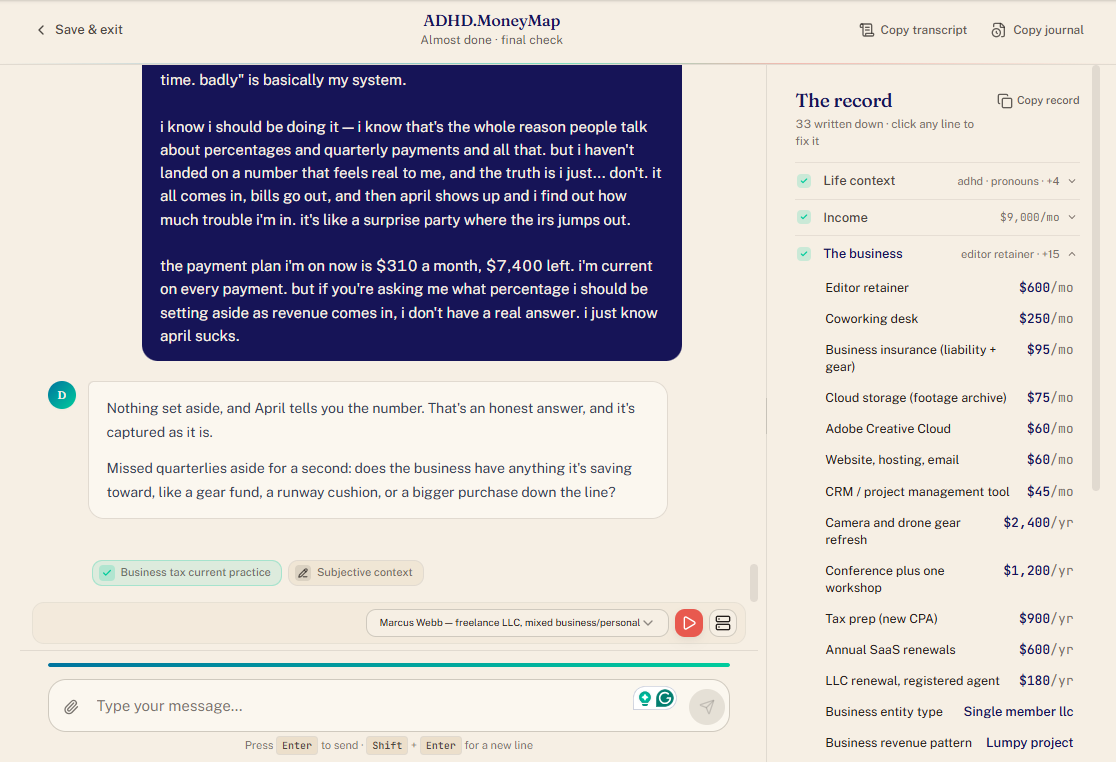 Three. Four things land in a portal you keep. About fifteen to thirty minutes after you finish, you get your honest map, which is where the money actually is right now. Your adjusted map, where every dollar has a job and the trade-offs are named rather than discovered later. Your tensions, which are the specific places your situation is pulling against itself, each matched to a framework for handling it. And your report, which explains what all of it means in your actual life.
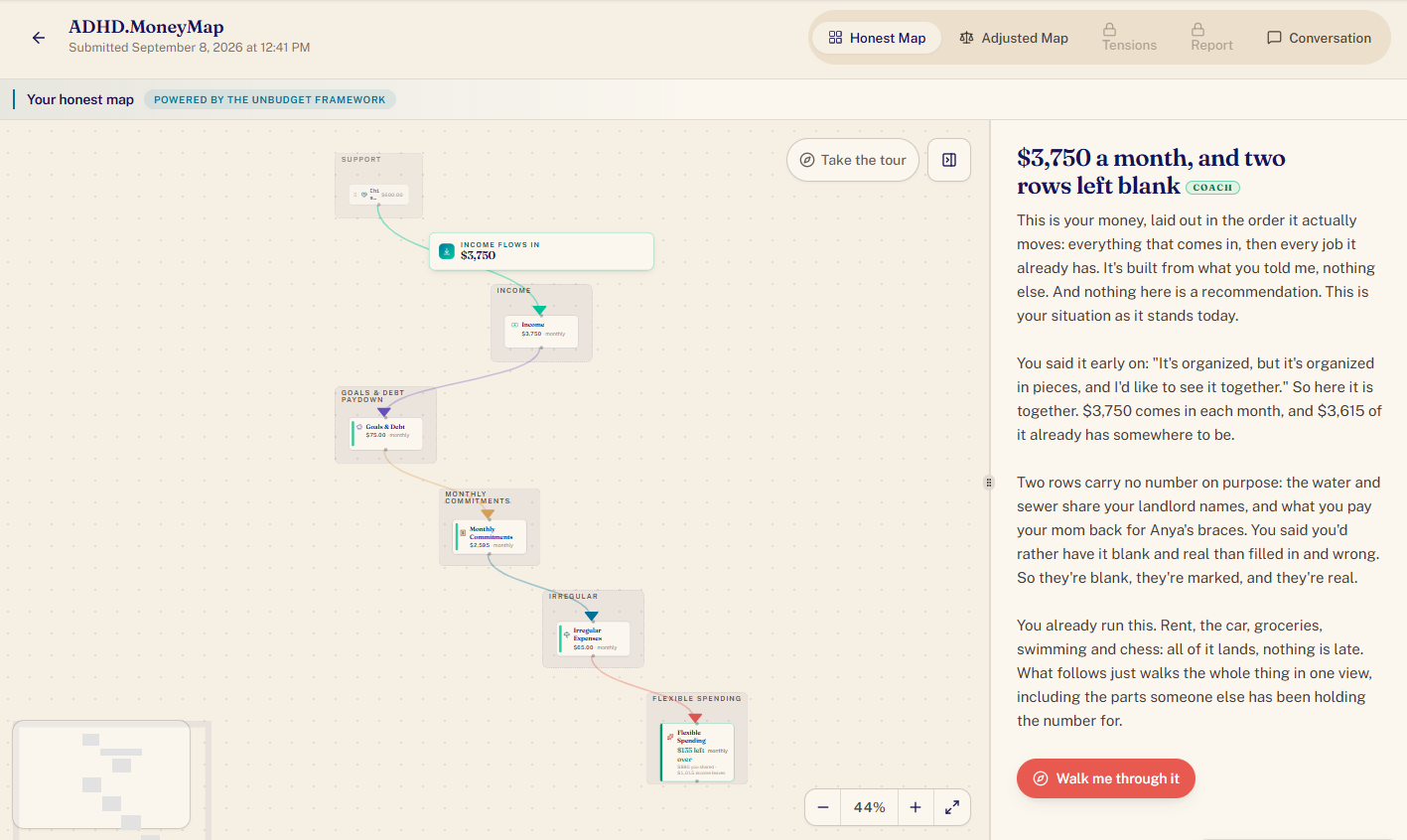 One revision is included. The portal is yours to keep.
The four buckets
Everything you have goes into four places. Four, not forty, and the number is deliberate.
Goals. What the money is ultimately for. The destination.
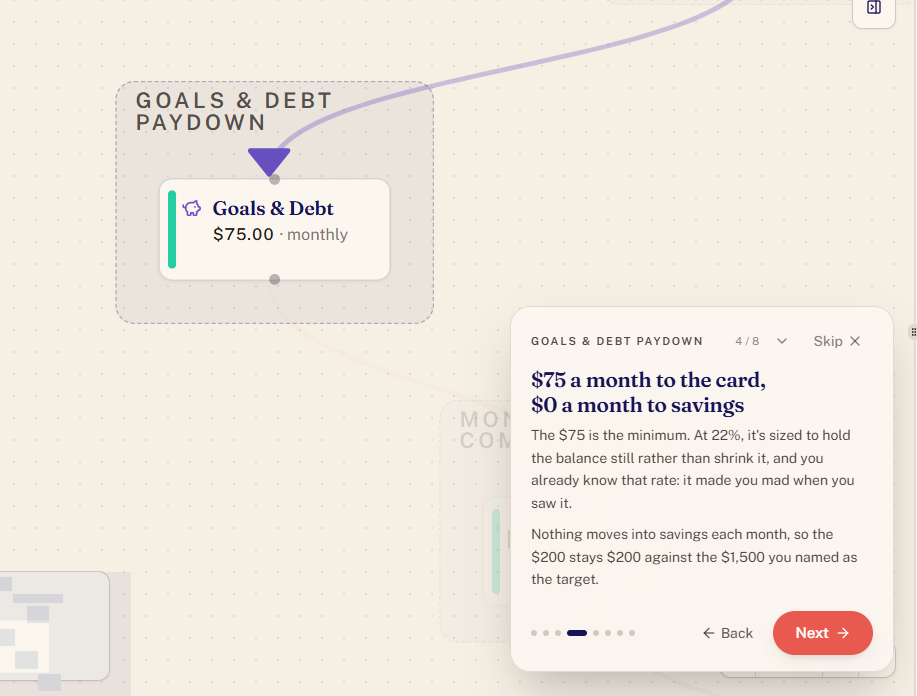 Monthly commitments. The decided money. Rent, insurance, the subscriptions you actually want. This bucket is not about listing them. It is about removing them from the pile of money that looks available, because they are already spoken for.
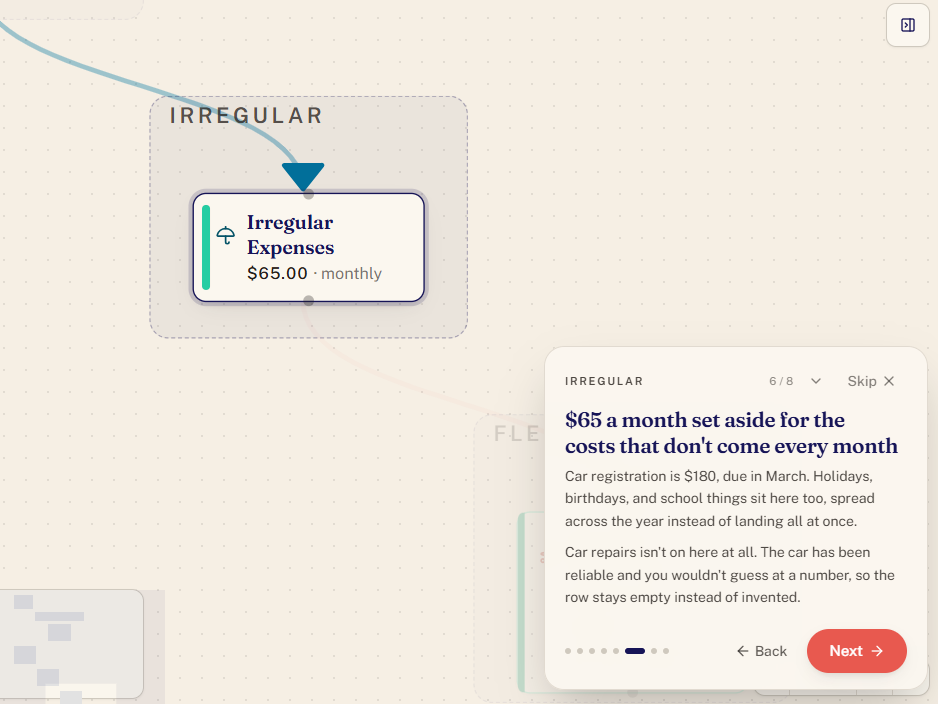
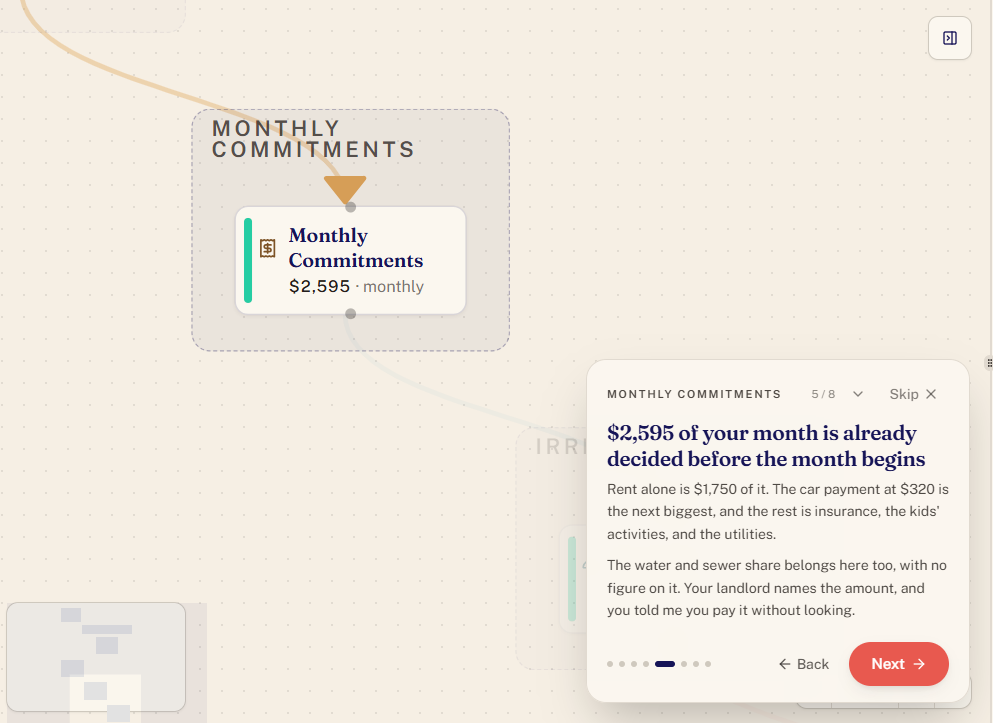 Irregular Expenses (Expected Surprises). The costs that arrive on dates you already knew about and still land like an ambush. Car registration. The annual renewal. The holidays, which have never once moved. They ambush people because they are not monthly, so they never appear in a monthly view. Give them a bucket and they stop being events.
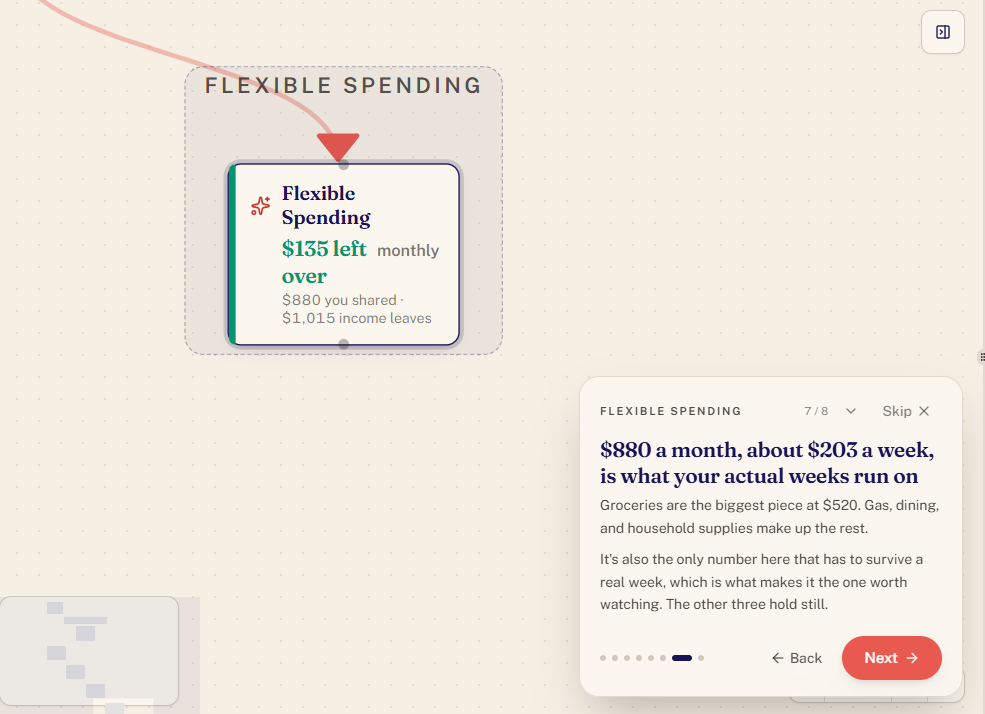
 Flexible spending. What is genuinely left after the other three are honest. This is the only bucket you actually steer, and it is where the one number comes from.
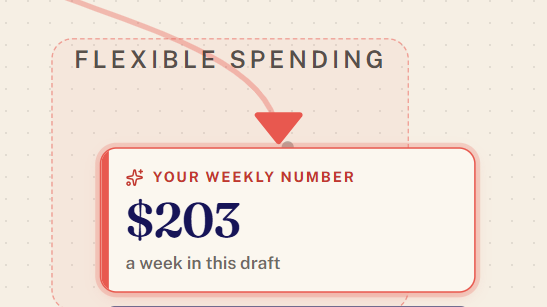
 That number is the point. One figure to watch each week, instead of a record of everything you buy. It is a single decision, made once and held, rather than a decision remade at every purchase.
 Why four and not forty? Because categories multiply until the upkeep costs more than the clarity is worth. Four is the smallest number that still separates money that is spoken for from money that is genuinely available. Below four the distinction collapses. Above four you are doing admin.
Get your ADHD.MoneyMap™
$99, and about an hour of conversation. No call to schedule and nothing to prepare.
What another year of this looks like
You already know, which is why this section is short.
Another stretch of moving money between accounts the night before something clears. Another expected surprise arriving on a date you knew and landing like an emergency anyway. The savings goal that slides one more quarter. And underneath it, the quiet running total of not quite knowing, which costs more attention than looking would.
Nothing dramatic happens. That is the thing about drift. It just continues.
What it looks like when you can see it
The whole picture on one page. Every dollar with a job. One number to watch.
The difference is not that you suddenly become disciplined. It is that far less of it runs on discipline in the first place. You are not holding the structure together with attention, because it was not built to need that from you.
Questions people ask before they buy
How long does it take? About an hour in conversation. You can stop and resume without losing your place.
Do I need to prepare anything or link my bank? No. Nothing to link, nothing to gather, nothing to tidy up first.
Is this a budgeting app? No. This is a one-time diagnostic that produces a map you keep. There is no ongoing software and nothing to log.
What happens after? You have your four artifacts in a portal you keep, with one revision included. If your situation changes later, another map is $39.
What if I need help? Nothing here requires a call. If you want one, that exists separately, but the map is complete on its own.
General education and coaching only, not personalized financial planning. No specific investment advice.